Microbial Biotechnology Research Programme
Nature-friendly approach to ameliorate Agriculture, Ecosystems, Environment, and Medicine
Research Focus
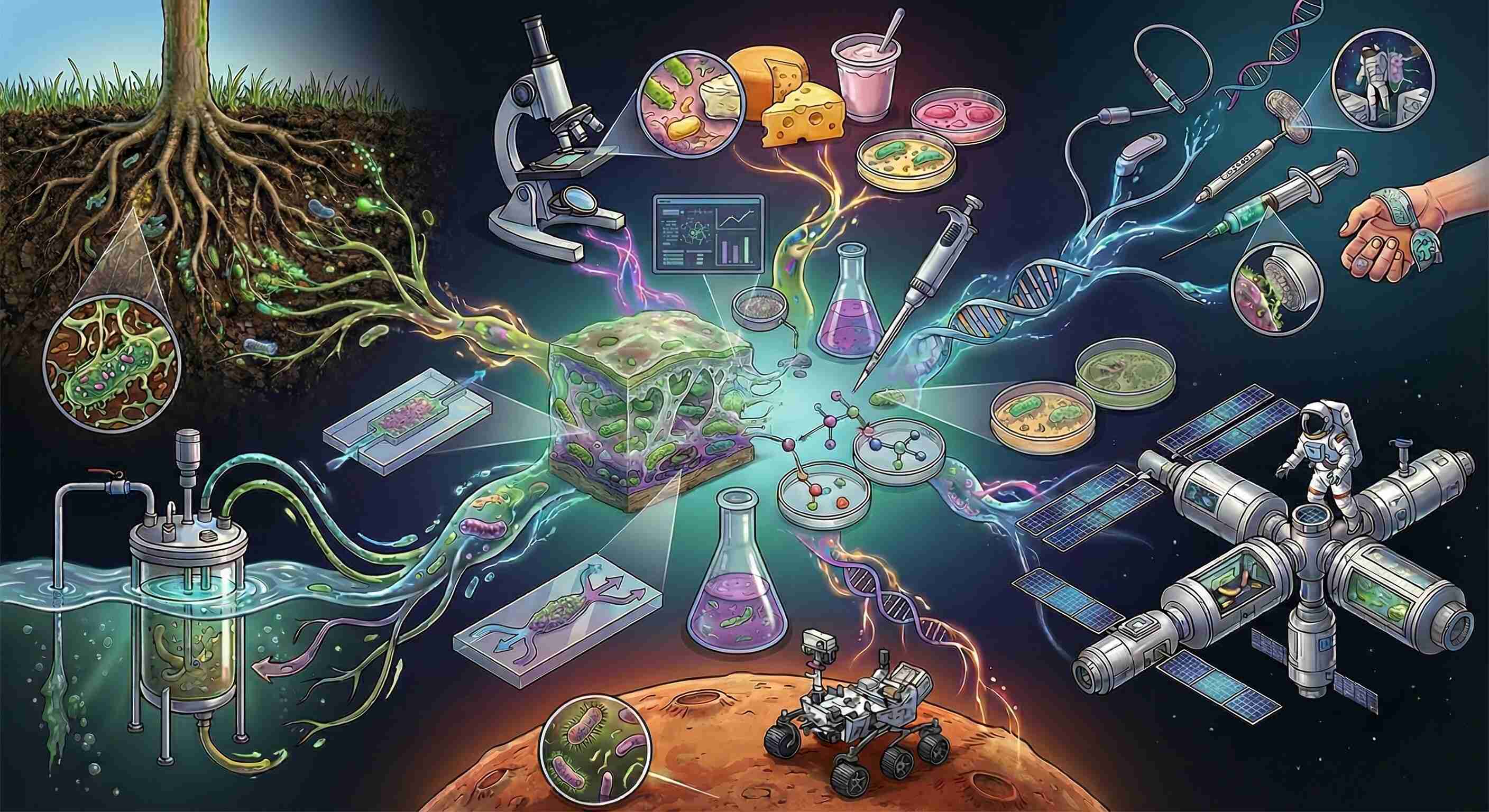
The microbial biotechnology research program (MBRP) investigates the applications of developed microbial biofilms (DMB) in agriculture, ecosystems and environment, and medicine.
The MBRP has developed biofilm-based biofertilizers i.e. Biofilm biofertilizers (BFBF), especially for non-legumes, e.g. tea, rice, vegetables, etc., which were tested extensively under field conditions, and commercialized in 2014. With the development of the concept of BFBF in 2002, research studies were started to evaluate the potential of the BFBF formulations as a microbial ameliorator in agroecosystems and the environment. Current studies are centered on the agricultural, health, and environmental benefits of using DMB.
The MBRP also conducts research to develop biofilm medicines/nutraceuticals (BFN) as next-generation medicine, and several industrially important applications using DMB.
1. The official linkedIn page of the Microbial Biotechnology Research Program (MBRP)
2. SciSpark e-magazine
Why does this matter ?
By 2022, BFBF had been applied to about 285,000 acres, covering over 16% of Sri Lanka’s paddy fields. Its use has cut chemical fertilizer inputs such as NPK by up to 50% while improving grain quality, yields, and soil carbon sequestration by 20–30%. Farmers, including those in organic systems, have adopted the technology because only 1 L or 10 kg per acre is needed compared with the 1,000-4,000 kg per acre of compost recommended for GAP-based farming. Research shows that microbial biofilm communities enhance soil health and plant performance, supporting long-term sustainability in agroecosystems degraded by conventional practices. BFBF’s versatility has led to broader applications in sustainable agriculture, offering cost-effective and environmentally friendly benefits that improve plant growth, soil properties, and grain quality while restoring microbial biodiversity and ecosystem functioning. Early, limited data from commercial BFBF applications prompted debate, with some researchers arguing that reported yield gains fell within error margins and noting challenges in scaling microbial technologies. However, extensive, systematic trials conducted across hundreds of thousands of acres have since demonstrated clear and significant yield improvements, driving widespread farmer adoption. As a result, Sri Lanka’s Department of Agriculture now recommends BFBF for paddy cultivation.
A characteristic feature of DMB is that they can be used in contrasting ecosystems, because it has been reported that, once applied, they increase microbial diversity and abundance, thus leading to improved functioning and sustenance of any managed or natural ecosystem, including the human body. In fact, the BFBF and BFN possibly offer solutions to restore agroecosystems degraded due to tillage and excessive use of chemical inputs, and human body ecosystem degraded due to modern lifestyle and dietary habits including the use of antibiotics and processed foods with low fiber content, respectively. Thus, cross-disciplinary research of agriculture, ecology, and medicine has been conducted by the MBRP to understand the holistic ecosystem approach of using DMB for remediating degraded, contrasting ecosystems. Such studies may indicate the possibility of applying the developed biofilms, thus relating the above three disciplines.